From Corporate Strategy to Enterprise Execution
Why Alignment Breaks Down Between Corporate Intent and What Actually Happens
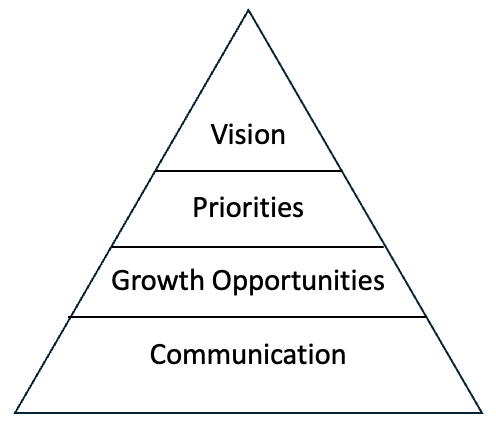
Organizations invest significant time defining their strategies. Leaders establish a vision, set priorities, identify growth opportunities, and communicate where the business needs to go.
Yet somewhere between executive intent and the work happening across the enterprise, the original strategy can begin to lose its meaning.
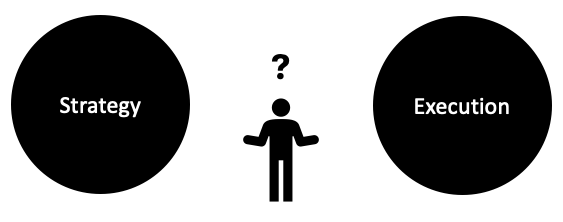
Priorities compete. Investments become disconnected. Business units interpret objectives differently. Teams focus on their own deliverables. Operating models remain unchanged. Technology decisions move forward without a clear connection to business outcomes.
The organization may be busy. Initiatives may be progressing. Milestones may be met and yet the business may not be moving in the direction its leaders intended.
The challenge is not simply executing the strategy. It is translating strategic intent into coordinated decisions, capabilities, and actions across the enterprise.
That translation is where alignment is often lost.
Strategy Is Only the Beginning
Corporate strategy establishes direction. It defines the outcomes an organization wants to achieve and the choices it must make to get there.
But a strategy does not execute itself. For strategic intent to become reality, it must influence how the organization operates, how resources are allocated, how leaders make decisions, how teams work together, and how success is measured. For example:
Growth strategies require more than revenue targets. They may demand new capabilities, partnerships, products, operating models, and ways of reaching customers.
A customer experience strategy requires more than redesigning individual touchpoints. It requires the organization to understand how its products, services, processes, people, and technologies collectively shape the customer journey.
Digital transformation strategy requires more than technology investments. It may require changes to processes, organizational structures, governance, skills, and the experiences of the people expected to use new solutions.
In each case, the strategy establishes the ambition. The enterprise must translate that ambition into the conditions required to achieve it.
When the connections between strategy and execution are missing, the organization can deliver its initiatives without delivering its intended outcomes.
Where Alignment Breaks Down
Alignment is often treated as a communication challenge. Leaders establish a vision, share priorities, cascade objectives, and expect the organization to move in the same direction.
Communication matters, but understanding the strategy does not automatically translate into the ability to execute it.
Alignment breaks down in the space between what leadership intends and what the organization is designed, equipped, and empowered to do.
Strategy and Operating Models Become Disconnected
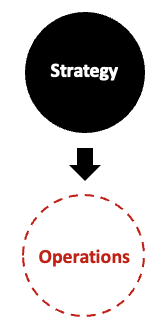
An organization may establish new strategic priorities without changing the operating model that governs how work gets done.
Decision rights remain unclear. Governance continues to reinforce existing structures. Teams operate according to established responsibilities, even when the strategy requires new forms of collaboration.
The strategy changes, but the mechanisms for executing it do not.
When the organization continues to operate according to yesterday's priorities, today's strategy struggles to gain traction.
Enterprise Priorities Compete With Local Objectives
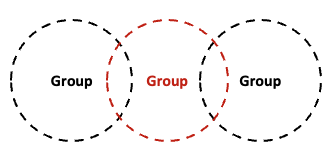
Business units and functional teams are often accountable for their own budgets, performance measures, and deliverables. Those accountabilities are necessary, but they can create tension when local priorities do not reinforce enterprise objectives.
A function may optimize cost while another is expected to improve service. A technology team may prioritize standardization while business groups need flexibility. A business unit may protect its own resources even when enterprise-wide investment would create greater value.
Each can make a rational decision, yet the organization can still get a worse result when local optimization creates systemic friction.
Enterprise alignment requires more than agreement on the destination. It requires decisions at every level to reinforce the direction of the whole.
Initiatives Move Forward Without a Shared View of Dependencies
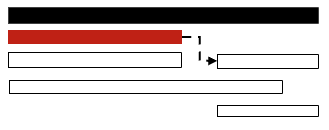
Enterprise strategies rarely depend on a single initiative, team, or capability. They require multiple changes to happen together, often across organizational boundaries.
A new digital experience may depend on technology platforms, data, operational processes, product decisions, employee readiness, and external partners. If those dependencies are not understood and actively managed, individual initiatives can progress while the overall transformation stalls.
Teams may deliver their assigned work on time, yet the pieces do not come together as intended.
The issue is not necessarily a lack of execution. It is a lack of coordination across the system.
Measures of Success Reward Activity Instead of Outcomes
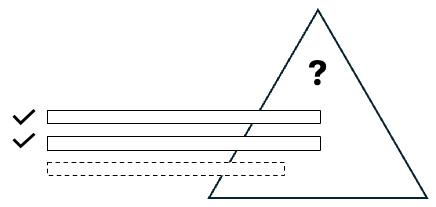
Organizations often measure progress through budgets, milestones, deliverables, and project completion. These measures help leaders understand whether work is progressing as planned, but they do not necessarily show whether the strategy is producing the intended value.
A program can launch on schedule without improving the experience it was designed to create. A new platform can be implemented without changing how the business operates. A restructuring can be completed without improving decision-making or organizational performance.
When measures focus primarily on delivery, teams can succeed at completing work while the organization falls short of its strategic objectives.
Execution is not complete when the work is delivered. It is complete when the intended change creates meaningful results.
Strategy Must Connect Across the Enterprise
These breakdowns are rarely isolated. They reinforce one another.
A strategy that is disconnected from the operating model creates uncertainty about how work should change. Unclear priorities create competing investments. Unmanaged dependencies introduce delays and gaps. Measures focused on activity make it difficult to recognize when the organization is drifting away from its intended outcomes.
The result is a familiar pattern: more initiatives, more coordination, more reporting, and more effort, without a corresponding increase in strategic progress.
The solution is not necessarily to add another governance layer or create more detailed project plans.
It is to establish a clear line of sight between strategic intent, enterprise capabilities, operating decisions, execution, and measurable outcomes.
That means understanding what the strategy requires the organization to do differently, what capabilities must change, which investments matter most, how responsibilities and decision rights need to evolve, and where initiatives depend on one another.
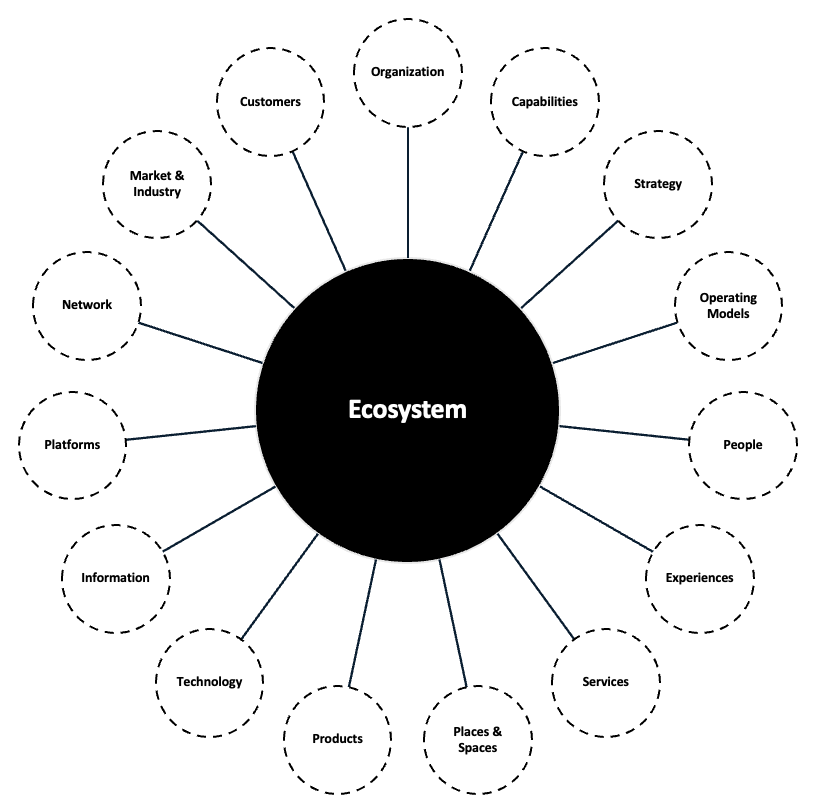
It also means recognizing that execution is not confined to the boundaries of individual functions or projects. The work must connect across the enterprise, including the people, partners, experiences, services, workplaces, products, technology, and platforms that contribute to the desired outcome.
Enterprise business architecture can help make these relationships visible by connecting strategic objectives to the capabilities, value streams, operating models, experiences, places & spaces, products, information, and technology required to realize them.
Enterprise program management can then help coordinate the work across initiatives, align stakeholders, manage dependencies, resolve conflicts, and maintain visibility into progress and outcomes.
Neither discipline replaces leadership or sound decision-making. Both can help turn strategic intent into a connected, executable plan.
From Corporate Intent to Enterprise Action
Consider a common enterprise challenge: an organization sets a strategic objective to create a more connected, intelligent customer experience.
Leadership aligns around the ambition. Business units launch improvement initiatives. Technology teams invest in new technologies and platforms. Individual functions redesign services and processes.
Each initiative has an owner, a budget, and a plan.
But without a shared view of the intended end-to-end experience, the organization may end up with disconnected solutions, overlapping investments, inconsistent processes, and gaps between what customers expect and what the business delivers.
The strategy was clear. The activity was real. The alignment between the two was incomplete.

A different approach begins by defining the outcome and working backward. What capabilities must the organization have? Which processes, products, services (Digital, Environmental, etc.), and experiences must work together? Which business groups and partners need to participate? What dependencies must be resolved? How will leaders know whether the experience has actually improved?
These questions shift the focus from delivering individual initiatives to coordinating the changes required to achieve the strategic outcome.
The difference is not simply better project management. It is a shared understanding of what the enterprise must accomplish together.
Execution Requires Continuous Alignment
Alignment is not a one-time activity completed when a strategy is approved or communicated.
As execution progresses, assumptions change. Dependencies emerge. Markets shift. Technology introduces new possibilities. Business priorities compete for resources. Decisions made in one part of the organization create consequences elsewhere.
The enterprise must be able to recognize these changes and respond without losing sight of its strategic direction.
That requires a continuous connection between planning, research, prioritization, change, delivery, measurement, measurement, and adjustment.
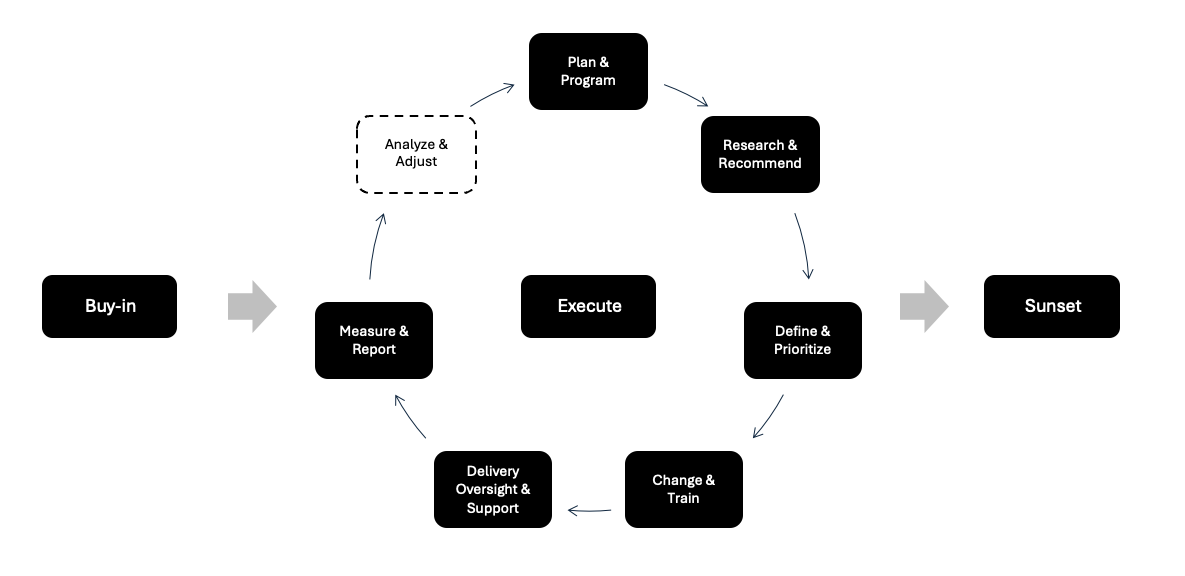
Leaders need visibility into whether the market changed, customers changes, initiatives remain aligned with strategic priorities, whether capabilities are developing as expected, whether dependencies are being managed, and whether the outcomes justify continued investment.
They also need the discipline to make trade-offs, resolve conflicts, and change course when evidence shows that the original approach is not working.
This is where corporate strategy and enterprise execution become a connected management discipline rather than separate phases of work.
The objective is not to prevent every deviation from the plan. It is to ensure that decisions made along the way continue to support the outcomes the organization is trying to achieve.
Real-world Example: Creating Clarity to Accelerate Execution
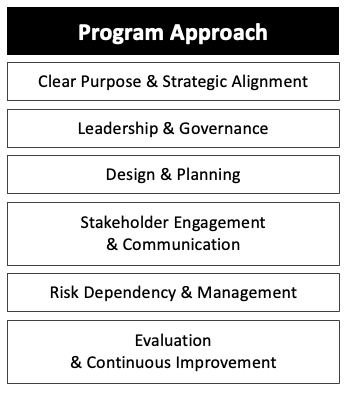
At a large technology organization, I spent three months redesigning, developing, and securing stakeholder buy-in for and implementing a new approach to the Global Campus Experience Business Program. The goal was to improve how work was coordinated and executed across the enterprise.
The challenge was not simply getting the work done. It was creating the clarity and alignment needed to move it forward effectively. When roles and responsibilities are unclear, decision-making becomes fragmented, expectations differ, and teams struggle to coordinate their efforts. This friction can undermine trust, delay progress, duplicate work, and increase costs.
The new approach integrated Human-centered Design, Prosci change management, and Six Sigma methodologies. It established clearer roles and responsibilities, defined decision-making expectations, and aligned stakeholders around how the work would be coordinated and delivered.
With a shared understanding of ownership, expectations, and execution, the organization was able to move forward more effectively and efficiently, while increasing executive satisfaction with the results.
The lesson was clear: execution improves when people understand not only what needs to happen, but who is accountable, how decisions are made, and how their work connects to the broader effort.
A well-designed program approach does more than organize activities. It connects people, decisions, and interdependent work to create the conditions for stronger collaboration, greater accountability, and meaningful enterprise outcomes.
The Simple Twist Perspective
At Simple Twist, we view strategy and execution as interconnected parts of enterprise transformation.
Strategic intent must translate into capabilities, operating models, investments, programs, and decisions. Those elements must work together across business groups, people, processes, technology, products, services, and experiences.
This requires more than a compelling vision or a well-managed portfolio of initiatives. It requires an understanding of how the enterprise creates value, where alignment is essential, how dependencies influence outcomes, and what must change to move from the current state to the future state.
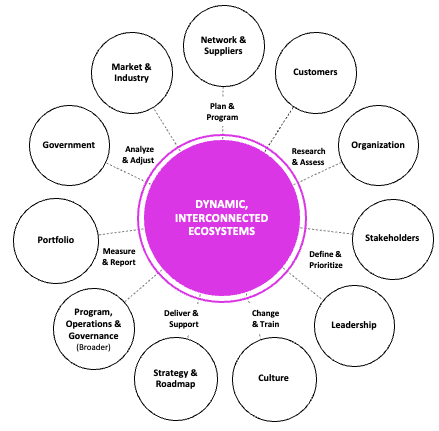
Our approach connects strategy, enterprise business architecture, program leadership, operating models, and transformation delivery to help organizations move from ambition to action.
Because strategy is not realized through isolated initiatives. It is realized through the collective decisions and coordinated actions of the enterprise.
From Intent to Impact
The ultimate test of a strategy is not whether it was clearly articulated, widely communicated, or translated into a portfolio of initiatives.
It is whether the organization can turn that intent into meaningful, measurable change.
That requires leaders to look beyond what each team is delivering and understand whether the enterprise is moving together toward the outcome it set out to achieve.
Strategy defines where the organization wants to go. Alignment connects the decisions and actions required to get there. Execution turns that direction into results.
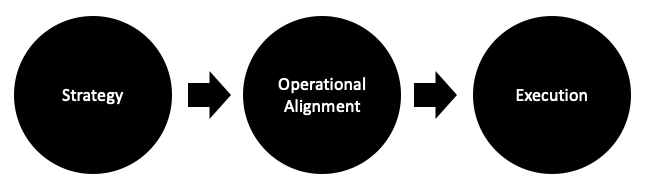
When those elements work together, strategy becomes more than a plan.
It becomes a way of organizing the enterprise around what matters most.
Have a complex problem you're trying to solve?
Let's explore it from a different elevation.
Simple Twist Inc.
Designing Intelligent Ecosystems. Enabling Transformation. Delivering Results.