Designing for Interdependence
In complex organizations nothing changes in isolation.
Leaders are increasingly being asked to transform systems they don’t fully control, where decisions have consequences they don’t fully own.
Every strategic decision, operating model change, technology investment, organizational redesign, or experience improvement creates effects somewhere else in the system.
Organizations are built to create accountability.
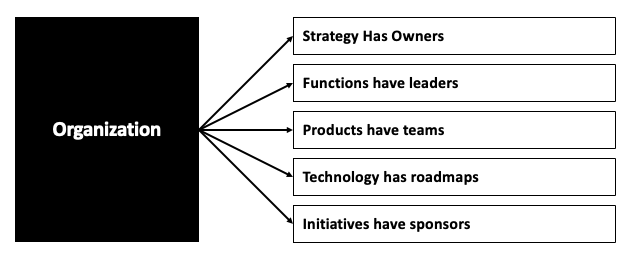
This structure helps organizations get things done. But it can also create a dangerous illusion - that the things we manage independently operate independently. They don't.
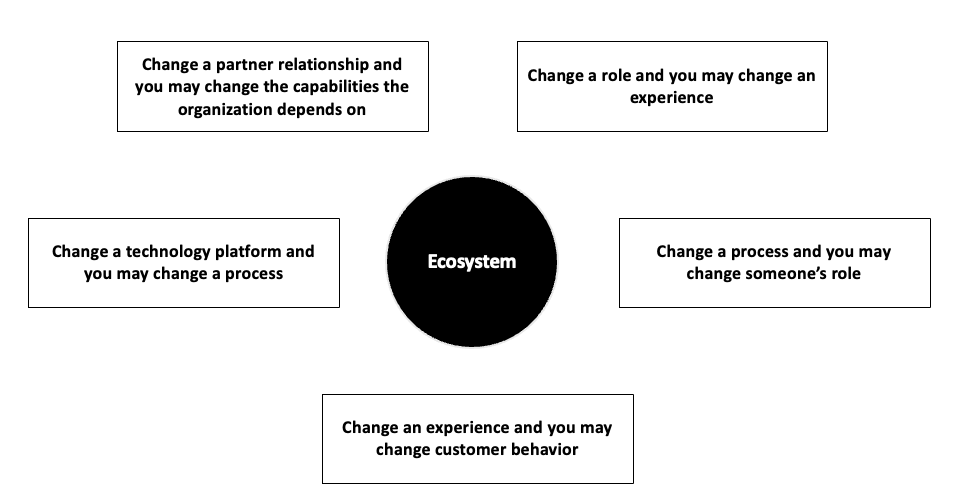
Nothing changes in isolation.
In transformation, interdependence is different from complexity.
Complexity describes the number and variety of things involved. Interdependence describes how those things affect one another.

An organization can have a lot of complexity without understanding its interdependencies, and that's where transformation starts to break down.
For example a company may successfully implement a new technology platform. The technology works. The project is delivered. The milestones are met. Yet adoption remains low, processes become more complicated, employees create workarounds, and customers experience more friction. The technology wasn't necessarily the problem.
The problem was that the technology was treated as independent from the system around it.
Leaders need to look beyond obvious dependencies.
The Hidden Dependencies:

Structural Dependencies
What systems, capabilities, processes, teams or organizations depend on one another?

Behavioral Dependencies
How will changing one thing change how people behave?

Experience Dependencies
How does changing one touchpoint affect the broader customer or employee journey?

Ecosystem Dependencies
What external partners, suppliers, platforms, regulators or communities influence the outcome?
The dependency you don’t see if often the one that creates the unintended consequence.
The problem with optimizing individual parts.
Organizations naturally optimize within boundaries:
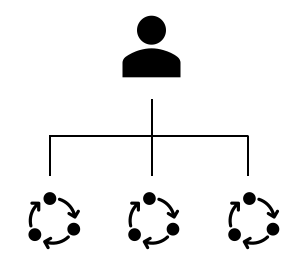
A technology team optimizes technology.
A business unit optimizes its performance.
A procurement team optimizes cost.
A product team optimizes the product.
A workplace team optimizes the workplace.
A transformation office optimizes the portfolio.
Each can make a rational decision, yet the organization can still end up with a worse outcome when local optimization creates systemic friction.
What is optimal for one part of the system may be a harmful to the system as a whole.
Unintended consequences aren’t always failures
In complex systems, some unintended consequences are inevitable. The leadership challenge is to anticipate them, make them visible, and design for them. For example:
A cost reduction may improve financial performance while increasing employee workload.
A productivity initiative may increase output while reducing collaboration.
A technology standardization effort may reduce complexity for IT while creating friction for users.
A partner consolidation strategy may improve efficiency while increasing dependency and reducing resilience.
A workplace redesign may improve space utilization while undermining the experience it was intended to improve.
The question needs to be re-framed:

Understanding the ecosystem, and the root of the problem that is enabling the problem, is key to a better solution.
Design for relationships, not just components
Most transformation methodologies focus heavily on components:
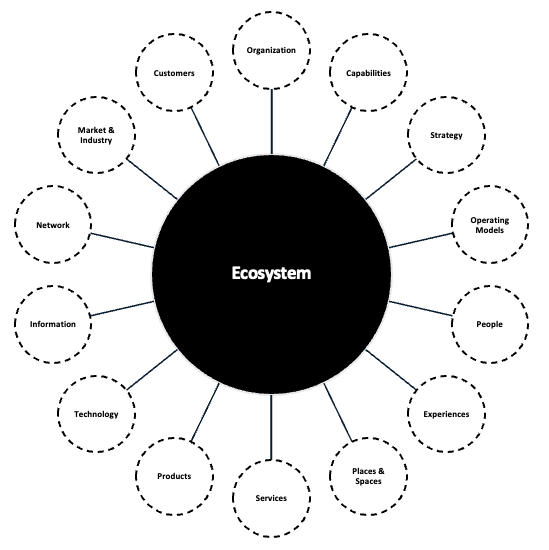
But interdependence requires leaders to design the relationships between those components.
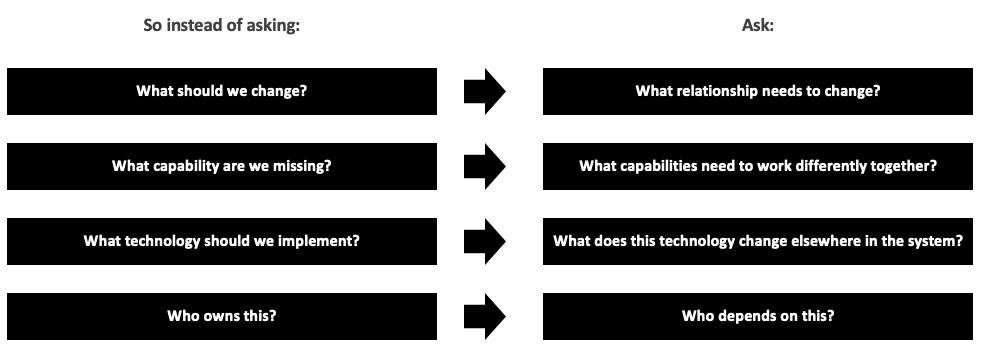
Asking the correct questions, shifts the focus from building something without full understanding of context, to solving the actual, deep-rooted problem an organization faces.
A practical leadership framework
Before making a significant transformation decision, ask five questions:

1. What are we changing?
Define the intervention.

2. What does it depend on?
Identify upstream dependencies.

3. What depends on it?
Identify downstream consequences.

4. Who else is affected?
Look across organizational and ecosystem boundaries.

5. What could happen that we didn't intend?
Surface second- and third-order effects.
Plan → Research → Define → Change → Deliver → Measure → Adjust
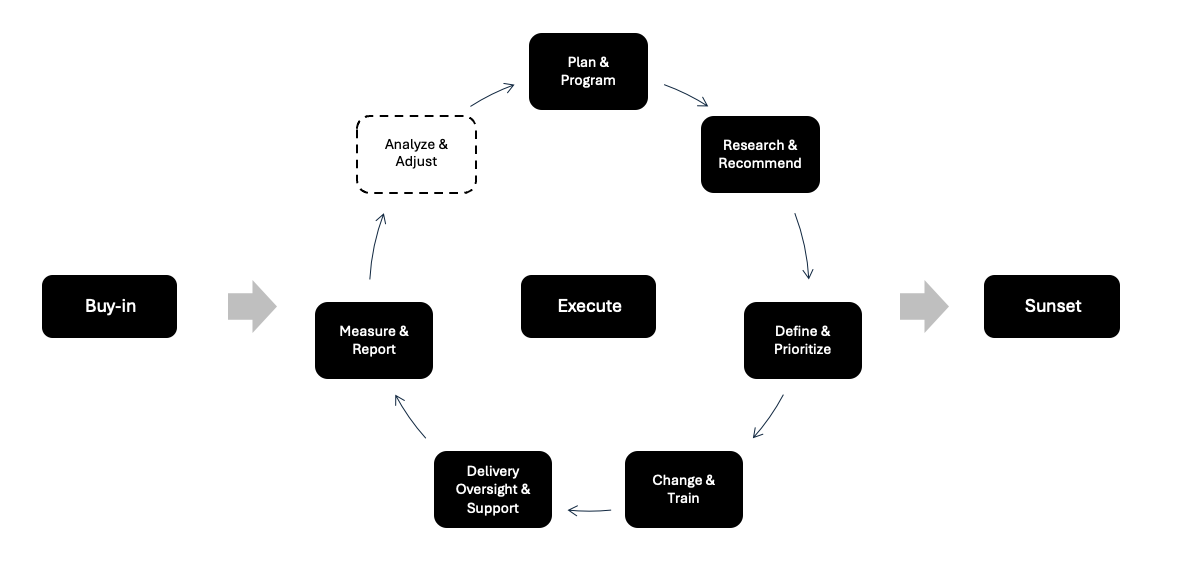
The transformation process is not linear, it’s highly agile and iterative, and can be applied systemically.
Plan - Identify and align objectives, capabilities, people, process, timelines, risk, and measures of success.
Research - Architect and connect the relevant parts of the system. Identify the overlaps, gaps, and opportunities.
Define - Envision a future state mapping new relationships, solutions, dependencies, architect how to get from current-to-future, and prioritize initiatives.
Change - Gather, train, and provide enough understand and support to move forward in a new way.
Deliver - Oversee and support the changes.
Measure - Quantify the results and the likely consequences, providing a leadership a direct line of insight into adoption of changes.
Adjust - Assess adoption, adjust if necessary, before scaling the change.
Together, these steps create an iterative approach to transformation - connecting strategy, people, processes, technology, and relationships to anticipate consequences, adapt to change, and achieve meaningful outcomes across the system.
The role of Enterprise Business Architecture
This is one of the reasons enterprise business architecture matters.
At its best, business architecture isn't simply a catalog of capabilities, processes, or organizational structures.
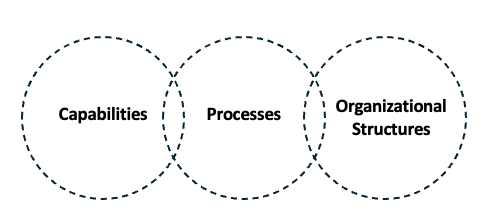
It provides a way to understand how organization, capabilities, strategy, operating models, people, experiences, and more connect.
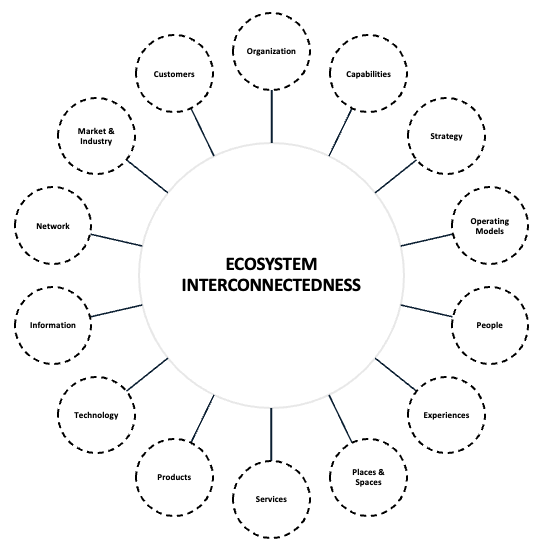
The value isn't only in mapping the parts. It's in making the relationships visible.
Real World Example: When Enterprise Transformation Lacks Alignment
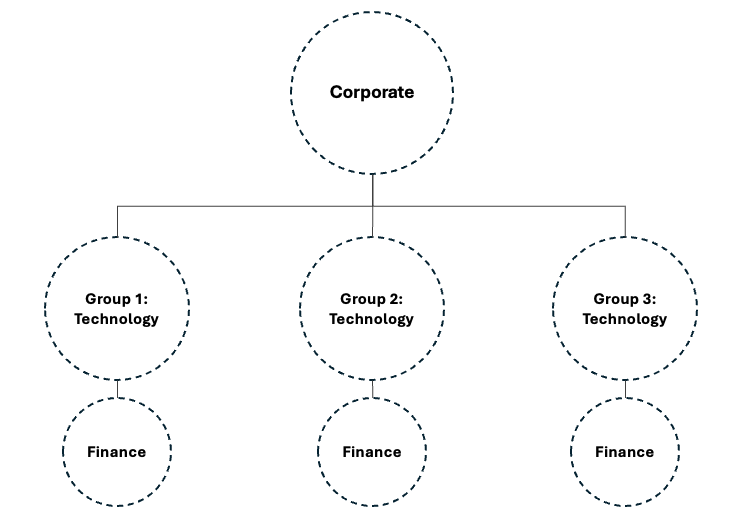
While working with two major enterprise corporations on global corporate campus transformations, I experienced two very different approaches to managing interdependence.
At one organization, enterprise program management connected business groups, clarified and aligned overlapping workstreams, and helped coordinate leadership, people, processes, timelines, experiences, services, products, digital capabilities, and technology. The program structure created shared visibility and a more coordinated approach to delivery.
At the other, the absence of clear program leadership and governance left critical decisions fragmented across business groups. Competing priorities, organizational politics, unclear ownership, and misaligned timelines created friction across the initiative. Experiences, services, digital decisions, and technology investments were not consistently coordinated, resulting in delays, frustration, and compromises in the quality of the final outcome. By launch, significant issues remained to be resolved.
The difference was not simply how the projects were managed. It was how the interdependencies were understood and addressed.
When complex initiatives are managed as separate workstreams rather than an interconnected system, gaps emerge between decisions, dependencies, and delivery. Enterprise program leadership helps make those connections visible, align accountability, and address issues before they become costly downstream problems.
A Simple Twist perspective
At Simple Twist, we believe transformation requires more than identifying what needs to change.
It requires understanding what that change touches:
Strategy touches operating models.
Operating models touch people.
People shape experiences.
Experiences influence behavior.
Technology enables new possibilities.
Partners extend organizational capabilities.
These aren't separate considerations. They are an interconnected system.
The goal isn't to eliminate interdependence. It's to design for it.
Closing Thought

They look beyond the immediate intervention to the relationships, dependencies and consequences surrounding it. Because in an interconnected system, the impact of a decision is rarely contained by the boundary of the decision itself.
Design for the connection. Design for the dependency. Design for what happens next. Design for interdependence.
Have a complex problem you're trying to solve?
Let's explore it from a different elevation.
Simple Twist Inc.
Designing Intelligent Ecosystems. Enabling Transformation. Delivering Results.